

''BUMI MATARIK ALLO'' TORAJA LAND
- atptour01

- Nov 18, 2020
- 2 min read


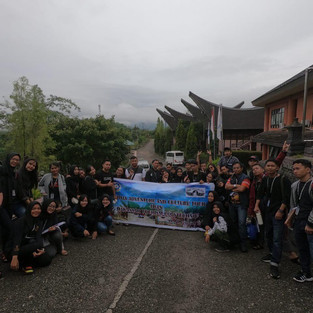
Tana Toraja or Toraja is one of the beautiful region at South Sulawesi, let alone in Indonesia. From the distance, one can see the jagget ridges of the hill stretching side by side along the slop of the mountains. Moreover, one can be also find beautiful valleys in which bamboo and sugar palms are growing and the traditional houses with curved roof among the paddy field, beautiful and naturally carved and colored by the skill full people of Toraja.
Before the Dutch came to power in this highland in the 20th century, there was not a single word given for the name of their religion except for the word "Aluk" means "the way" which refers to rituals and daily life activities that are to be controlled; like how to build a house, to cook rice, to greet children and the head of the village, and the number of buffaloes and pigs that must be slaughtered in every ritual ceremony. The most prestigious ceremony in Tana Toraja is the Death Ceremony.
More than half of the people of Toraja are Christians, but they are proud of their Cultural heritage and uphold it. This can be seen when they welcome the guests ritually.
The Torajan people had little notion of themselves as a distinct ethnic group before the 20th century. Before Dutch colonization and Christianization, Torajans, who lived in highland areas, identified with their villages and did not share a broad sense of identity. Although complexes of rituals created linkages between highland villages, there were variations in dialects, differences in social hierarchies, and an array of ritual practices in the Sulawesi highland region. "Toraja" (from the coastal languages' to, meaning people; and riaja, uplands) was first used as a lowlander expression for highlanders.
As a result, "Toraja" initially had more currency with outsiders such as the Buginese and Makassarese, who constitute a majority of the lowland of Sulawesi than with insiders. The Dutch missionaries' presence in the highlands gave rise to the Toraja ethnic consciousness in the Sa'dan Toraja region, and this shared identity grew with the rise of tourism in the Tana Toraja Regency. Since then, South Sulawesi has four main ethnic groups the Buginese (the majority, including shipbuilders and seafarers), the Makassarese (lowland traders and seafarers), the Mandarese (traders and fishermen), and the Toraja (highland rice cultivators).

Comments